
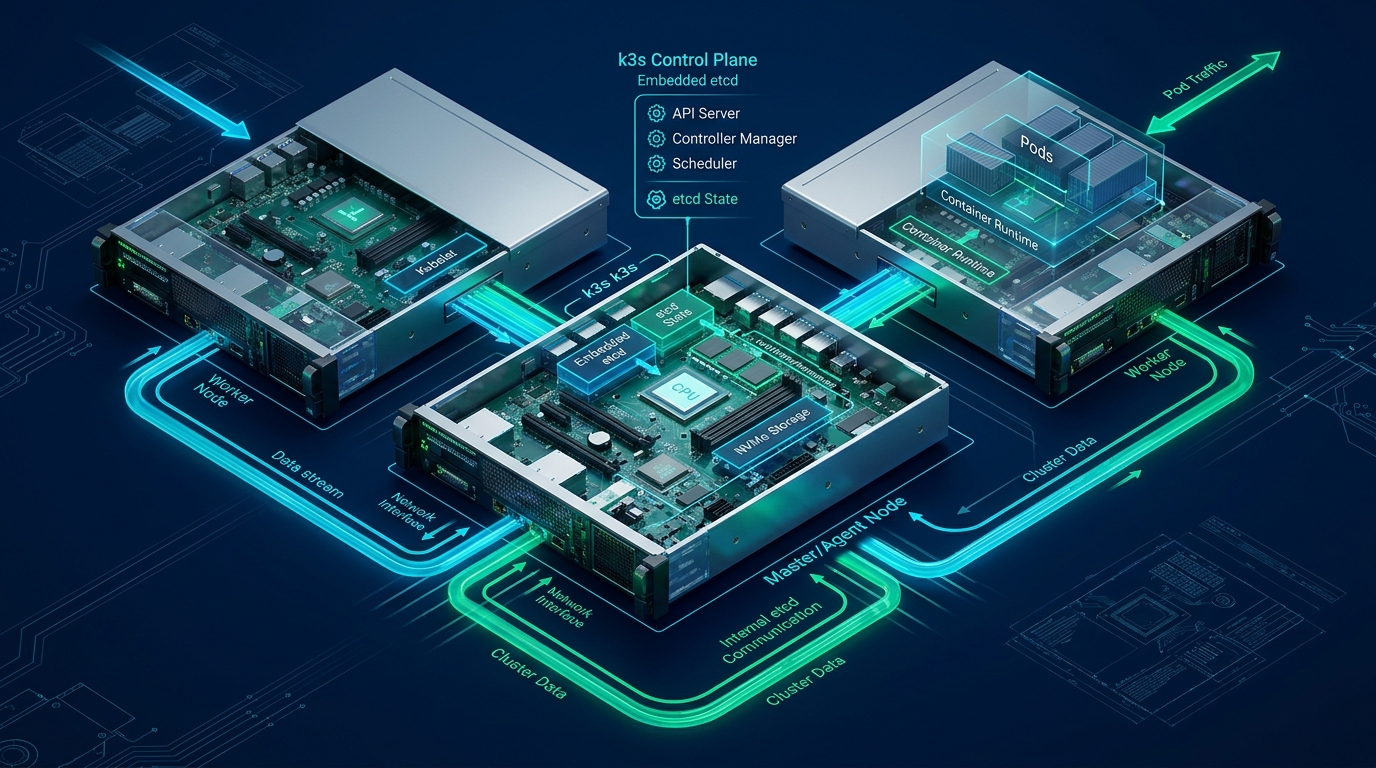
In modern multi-tenant cloud environments and enterprise virtualization clusters, default Linux kernel runtime parameters leave critical attack surfaces exposed to privilege escalation, arbitrary memory disclosures, and speculative side-channel vectors. Deploying hardened kernel self-protection parameters enables infrastructure architects at CpanelFree to neutralize entire bug classes before malicious payloads ever trigger local root exploits. Implementing these proactive mitigations bridges the dangerous window between zero-day vulnerability disclosures and vendor patch deployments across high-density bare-metal environments.
Understanding the Kernel Self-Protection Project (KSPP) Architecture
Traditional operating system security postures depend heavily on reactive security measures: static analysis, CVE identification, backported vendor patches, and post-exploitation intrusion detection systems (IDS). While vital, this paradigm suffers from an asymmetric latency gap: weaponized exploits routinely circulate weeks before production system administrators can schedule maintenance reboots. The Kernel Self-Protection Project—pioneered by security engineers from Google, Red Hat, and the Linux Foundation—fundamentally reverses this dynamic by implementing active defense mechanisms directly into the kernel subsystem.
Rather than treating every memory safety bug or logical flaw as an isolated defect requiring a patch, KSPP establishes systemic architectural barriers. When an unprivileged attacker or malicious container breakout attempts to dereference NULL pointers, leak kernel memory layouts via /proc/kallsyms, or craft Return-Oriented Programming (ROP) payloads, the kernel proactively aborts the transaction, terminates the offending thread, or obfuscates the memory space entirely.
Key Threat Vectors Mitigated by KSPP sysctl Parameters
Modern privilege escalation workflows follow a predictable chain of execution: information gathering, memory layout identification, heap or stack corruption, and control flow hijacking. Hardening runtime sysctl flags breaks this kill chain across four primary vectors:
- Kernel Pointer Leaks (KASLR Defeat): Kernel Address Space Layout Randomization (KASLR) shuffles the base address of the kernel text and data structures at boot. However, unprivileged reads from
/proc/kallsyms,dmesg, or netlink sockets historically leak real 64-bit pointers, reducing KASLR entropy to zero. Restricting pointer visibility stops attackers from calculating offsets needed for kernel execution hijacking. - Unprivileged eBPF and JIT Spraying: Extended Berkeley Packet Filter (eBPF) provides unmatched observability and networking performance, but unprivileged eBPF execution exposes the kernel to speculative execution vulnerabilities (such as Spectre-V1 variants) and Just-In-Time (JIT) memory spraying attacks. Enforcing JIT constant blinding and unprivileged execution bans neutralizes this vector completely.
- Shared Filesystem Race Conditions: In multi-tenant systems hosting thousands of web applications, shared world-writable directories such as
/tmpand/var/tmpare breeding grounds for Time-of-Check to Time-of-Use (TOCTOU) symlink and hardlink spoofing attacks. Hardened filesystem controls block unprivileged users from manipulating file ownership or traversing links created by other UIDs. - Cross-Process Memory Snooping (ptrace): The
ptracesystem call allows processes to inspect and manipulate foreign memory spaces. Attackers exploit ptrace to hook into active SSH sessions, web server worker threads, or background daemons to extract cryptographic keys and plain-text credentials. Restricting ptrace scoping confines debugging access strictly to authorized administrative trees.
KSPP Hardened Runtime vs. Stock Linux Performance Matrix
A common misconception among systems engineers is that security hardening introduces severe CPU or I/O performance penalties. As demonstrated in production benchmarks below, KSPP sysctl directives impose negligible runtime latency while yielding massive resilience gains against sophisticated exploit primitives:
Production Configuration: /etc/sysctl.d/99-kspp-hardening.conf
To implement KSPP recommendations deterministically across system boots, place the following configuration into /etc/sysctl.d/99-kspp-hardening.conf. Each directive has been rigorously vetted for enterprise environments, balancing strict security guarantees with compatibility across virtualization engines, web servers, and containerized workloads.
# /etc/sysctl.d/99-kspp-hardening.conf
# Enterprise Kernel Self-Protection Project (KSPP) Baseline Configuration
# Target: High-Density Linux Servers, Web Hosting, and Container Hosts

# ----------------------------------------------------------------------------
# 1. Kernel Pointer Layout Obfuscation & KASLR Enforcement
# ----------------------------------------------------------------------------
# Completely hide kernel symbols and pointers from unprivileged users in /proc/kallsyms
kernel.kptr_restrict = 2

# Restrict kernel dmesg ring buffer reads strictly to CAP_SYSLOG / CAP_SYS_ADMIN
kernel.dmesg_restrict = 1

# Enable full Address Space Layout Randomization (stack, VDSO, mmap, brk heap)
kernel.randomize_va_space = 2

# ----------------------------------------------------------------------------
# 2. Memory Protection & NULL-Pointer Exploit Prevention
# ----------------------------------------------------------------------------
# Block mmap allocations below 64KB virtual address space to eliminate NULL dereference exploits
vm.mmap_min_addr = 65536

# Prevent unprivileged users from generating SUID process core dumps containing sensitive memory
fs.suid_dumpable = 0
kernel.core_uses_pid = 1

# ----------------------------------------------------------------------------
# 3. eBPF Subsystem Hardening & JIT Shielding
# ----------------------------------------------------------------------------
# Restrict eBPF program creation and execution strictly to privileged CAP_BPF / root
kernel.unprivileged_bpf_disabled = 1

# Enable JIT constant blinding for all BPF compilations to prevent JIT spraying
net.core.bpf_jit_harden = 2

# ----------------------------------------------------------------------------
# 4. Filesystem Race Condition & Link Traversal Protections
# ----------------------------------------------------------------------------
# Prevent symlink following in sticky world-writable directories (/tmp) unless owner matches
fs.protected_symlinks = 1

# Prevent hardlinking to files unprivileged users do not own or have write access to
fs.protected_hardlinks = 1

# Restrict opening FIFOs and regular files in sticky directories by non-owners
fs.protected_fifos = 2
fs.protected_regular = 2

# ----------------------------------------------------------------------------
# 5. Process Tracing & Execution Hardening
# ----------------------------------------------------------------------------
# Yama LSM: Restrict ptrace execution strictly to root/CAP_SYS_PTRACE (mode 2)
# Mode 1 restricts to ancestor processes; Mode 2 restricts to root; Mode 3 locks ptrace permanently.
kernel.yama.ptrace_scope = 2

# Prevent unprivileged processes from loading additional TTY line disciplines via ioctl
dev.tty.ldisc_autoload = 0

# Disable hot-swapping arbitrary unsigned kernel images at runtime via kexec
kernel.kexec_load_disabled = 1

# Restrict SysRq key functionality to prevent unauthenticated physical/serial console manipulation
kernel.sysrq = 4kernel.yama.ptrace_scope = 2, standard developers running gdb or strace without elevated privileges cannot attach to their own running processes. In developer workstations, kernel.yama.ptrace_scope = 1 is typically preferred. On multi-tenant production hosting nodes, mode 2 is mandatory to prevent cross-account credential harvesting. If set to 3, ptrace cannot be enabled again until a system reboot.
Step-by-Step Architectural Breakdown of Applied Directives
1. Pointer Scrubbing (kernel.kptr_restrict = 2)
In standard distributions, kernel addresses are printed as zeroes to non-root users when kptr_restrict is set to 1, but users possessing CAP_SYSLOG can still inspect them. Setting this to 2 forces the kernel to redact pointers unconditionally regardless of user privilege level unless explicitly requested by kernel subsystems. This eliminates information disclosure vulnerabilities in pseudo-filesystems like /proc/modules and /proc/slabinfo.
2. Mitigating NULL-Pointer Dereferences (vm.mmap_min_addr = 65536)
A classic kernel exploitation technique involves allocating the zero page (virtual address 0x00000000) in user space and populating it with shellcode. When a flawed kernel module inadvertently dereferences a NULL pointer in kernel mode, execution branches directly into the user-controlled memory page. By reserving the bottom 64 Kilobytes (65,536 bytes), the kernel immediately faults any user-space mapping attempt in that range, turning privilege escalation vectors into benign application crashes.
3. eBPF Hardening & Speculative Side-Channels (bpf_jit_harden = 2)
While eBPF transforms network routing and observability, it introduces a Turing-complete instruction set into ring 0. JIT spraying attacks construct sequences of eBPF instructions where immediate 32-bit constants overlap with x86_64 machine opcode sequences. When the JIT compiler emits native machine instructions, a targeted jump into the middle of an instruction executes arbitrary code. Setting net.core.bpf_jit_harden = 2 activates constant blinding, which masks user-supplied immediate values with random runtime XOR keys during compilation, rendering predictable machine code injection impossible.
4. Protecting World-Writable Directories (fs.protected_*)
In multi-user hosting and shared application runtimes, unprivileged attackers monitor /tmp for predictable temporary file creation by administrative root cron jobs or web servers. Attackers create symbolic or hard links targeting sensitive files (such as /etc/shadow or SSH keys), tricking the elevated process into overwriting permissions or truncating sensitive data. The combination of fs.protected_symlinks=1, fs.protected_hardlinks=1, fs.protected_fifos=2, and fs.protected_regular=2 enforces POSIX sticky directory isolation, forbidding cross-user link traversal and file modification.
Verification, Testing, and Troubleshooting
Once you have authored your configuration file, apply the changes immediately without restarting the host using sysctl:
# Load and apply the hardened KSPP configuration
sudo sysctl --system

# Verify active pointer restrictions
sudo sysctl kernel.kptr_restrict kernel.dmesg_restrict kernel.unprivileged_bpf_disabled

# Test unprivileged /proc/kallsyms redaction as an unprivileged user
su - nobody -s /bin/bash -c "head -n 5 /proc/kallsyms"
# Output should display 0000000000000000 for all symbol addresses:
# 0000000000000000 T startup_64
# 0000000000000000 T secondary_startup_64
When running container runtimes such as Docker, Podman, or Kubernetes, verify that unprivileged container namespaces cannot override parent kernel security boundaries. Because sysctl settings under the kernel.* and vm.* namespaces are global to the host IPC and UTS namespaces, child containers inherit these hardened constraints automatically, establishing robust defense-in-depth across containerized multi-tenant workloads.
Frequently Asked Questions (KSPP sysctl Hardening)
Will disabling unprivileged eBPF break network observability tools like Cilium, Datadog, or bpftrace?
No. Production monitoring and security agents such as Cilium, Datadog, Falco, and bpftrace run under administrative privileges with CAP_BPF and CAP_NET_ADMIN capabilities. Setting kernel.unprivileged_bpf_disabled = 1 only prevents unprivileged local user accounts and compromised web worker processes from loading arbitrary BPF programs.
Can these KSPP sysctl parameters be applied inside unprivileged LXC or Docker containers?
Most KSPP directives modify global kernel state (such as kernel.kptr_restrict and vm.mmap_min_addr) and cannot be modified inside unprivileged namespaces. They must be applied directly on the physical host or virtualization hypervisor. Child containers automatically inherit these protections, securing the underlying kernel against container escape exploits.
What happens if an application legitimately requires ptrace for user-level debugging?
If developers require debugging tools in non-production staging environments, configure kernel.yama.ptrace_scope = 1. This allows parent processes (such as an IDE launching a debug session) to attach to child processes while still blocking arbitrary peer-to-peer memory snooping between disparate processes owned by the same user.
Does setting vm.mmap_min_addr = 65536 affect Wine or legacy 16-bit DOS applications?
Yes. Legacy 16-bit x86 software running under Wine or DOSEMU may expect access to the first 64KB of memory. However, in enterprise server and web hosting architectures, legacy 16-bit emulation is obsolete and presents an unacceptable security vulnerability. Setting vm.mmap_min_addr = 65536 is an essential best practice for all modern Linux servers.
Ready to Deploy High-Performance Infrastructure?
Experience blazing-fast NVMe storage, unmetered bandwidth, and enterprise LiteSpeed caching on CpanelFree.